
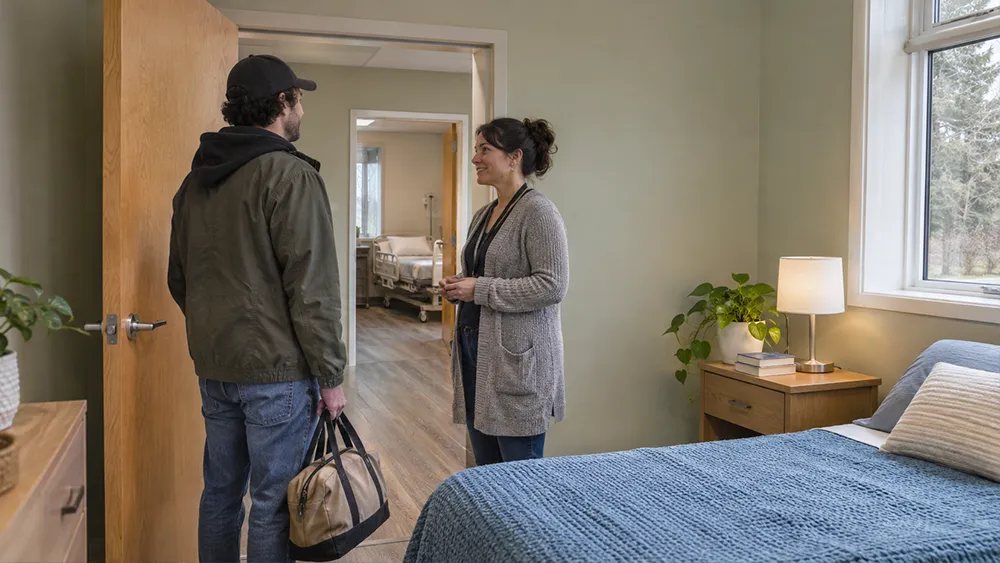
Brockville’s new Homelessness and Addiction Recovery Treatment (HART) Hub admitted its first three clients for withdrawal care on opening day, its operator told the Recorder and Times. The hub also brings residential treatment and transitional housing into the same building. For someone leaving withdrawal care, the value of that setup depends on being able to move into treatment when they’re ready or having support while they wait.
The operator, Lanark, Leeds and Grenville Addictions and Mental Health (LLGAMH), announced eight beds for withdrawal management, 16 for residential treatment, and 10 for transitional supportive housing. Withdrawal management is short-term medical support for people coming off substances. For people who need further care, moving on means getting a place in a program with its own beds and admission rules.
Moving from treatment to housing
The Brockville hub accepts self-referrals by phone, giving people a way to contact the program directly. Its supportive housing program is for people who have completed treatment at the hub and still need structured support. The operator describes accommodation where substance use is prohibited, with clinical follow-up and case management.
LLGAMH also runs the Smiths Falls hub. It says five people there moved from treatment into on-site supportive housing and two others moved into their own rentals. As people leave treatment in Brockville, tracking where they go and who supports them if they have to wait for housing will show how the handoff works.
Who helps after discharge
At its five-bed withdrawal service in Vanderhoof, B.C., Carrier Sekani Family Services says staff help people connect with follow-up services and arrange transportation to treatment after discharge. The organization plans to bring withdrawal care and residential treatment together at the Tachick Lake Healing Centre, now under construction on Saik’uz territory.
Brockville already has withdrawal care and treatment in one building. If someone is ready to leave withdrawal care and has to wait for a treatment bed, the handoff depends on who helps them find somewhere to stay and keeps in touch until they can start treatment.
Finding out whether people stay housed
A rapid review of 57 studies found the strongest evidence for housing stability among adults experiencing homelessness and substance use, including some with mental health conditions. The clearest findings came from Housing First programs, and findings on substance use and mental health outcomes were mixed. The review drew on studies published before the new services opened.
The time between treatment and housing is part of the care a recovery hub has to plan for. If someone is ready to leave treatment and a housing bed is unavailable, they need somewhere safe to stay and a provider who can keep working with them until they move in. How Brockville handles that gap will show whether its services connect for the people who need them most.