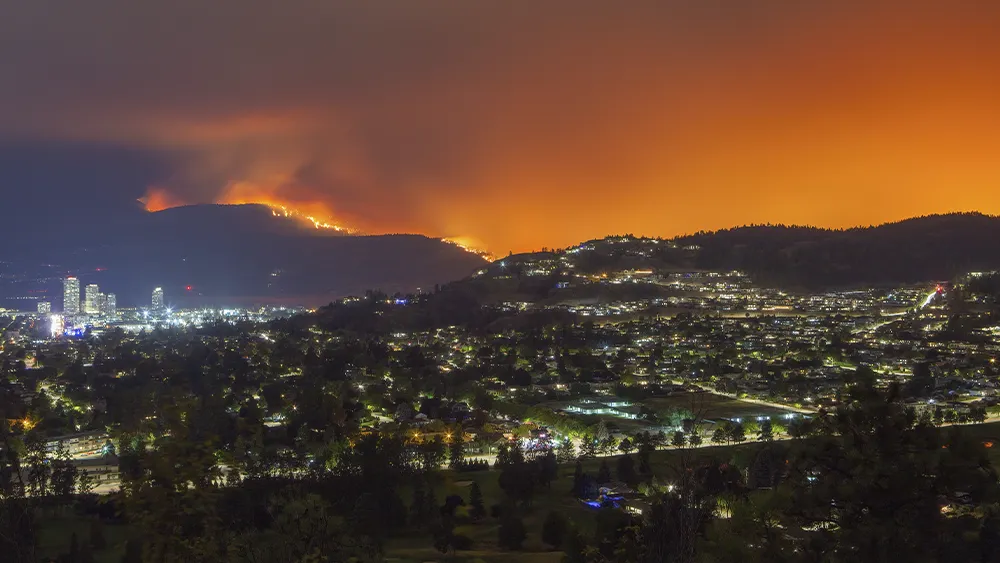

We need to shift our approach towards prevention and away from reaction when it comes to climate emergencies.
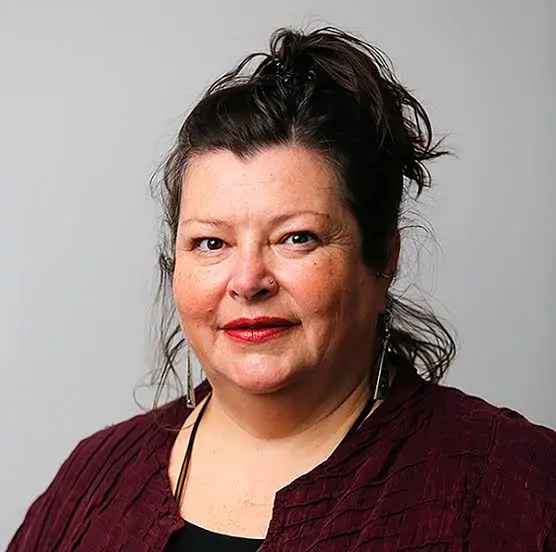 Marie-Josée HouleFederal Housing Advocate, Canadian Human Rights Commission
When a wildfire threatens a remote First Nation in British Columbia, a crew may have a long way to travel to reach a home that's already vulnerable. Windows that no longer seal let smoke inside. A house in need of major repairs is more vulnerable to windblown embers. Where access roads or hydrants are inadequate, firefighters have fewer ways to protect it.
By mid-August 2025, wildfires had affected 134 First Nations across Canada and forced more than 40,000 people from their communities. Marie-Josée Houle, who worked in affordable housing development before becoming Canada’s first Federal Housing Advocate, examined those evacuations with the Assembly of First Nations.
In their joint report, Houle and the Assembly of First Nations trace those risks to decades of underfunding for housing and infrastructure. They also heard from First Nations leaders who knew which homes needed protection and lost time waiting for other authorities to approve help.
“We need to shift our approach towards prevention and away from reaction when it comes to climate emergencies,” Houle says. “What is clear is that something that was a one-off or 50-year event now is a regular thing.”
While there’s still time to protect a home
The First Nations’ Emergency Services Society conducts rapid assessments in threatened communities in British Columbia. A crew might spot firewood stacked against a house or debris close to its walls.
Under the society’s joint guidance with BC Wildfire Service, a provincial incident commander assesses the threat and can deploy crews and equipment to protect buildings. If the commander finds a community is not at risk and the First Nation still sees a threat, it can request help directly from the society. When the society deploys outside a provincial incident at a community’s request, the society bears the cost.
“Every government has a role to play. Progress requires sustained effort, funding, and cooperation,” Houle says. “That’s especially important when it comes to emergency management, so that communities have a say in circumstances that, quite frankly, are life and death.”
For Houle, that authority extends to how a community prepares long before a fire approaches. She points to the revival of cultural fire stewardship after colonial authorities outlawed many of those practices. “We’re seeing the resurgence of this knowledge and some of these practices to ensure that their communities are protected.”
Keeping families together
When a First Nation decides its members need to leave, its emergency team knows which Elders rely on family for care and which residents will need help getting around. Whether that knowledge follows people to the host community can determine something as basic as whether an Elder has a walker when they arrive.
“Already vulnerable, evacuees experienced unsafe conditions, separation from family, degradation, and an absence of cultural supports,” Houle writes in the report’s foreword. Some families were split across hotels. Some Elders found themselves away from the people they relied on for care.
Houle points to First Nations-led emergency operations as a model for the rest of the country. “When it comes to climate emergencies, Indigenous-led approaches show what’s possible,” she says. “Indigenous-led emergency operations centres, community-based fire training, cultural fire stewardship, and climate-resilient housing initiatives should guide national practices.”
The report describes how ISN Maskwa, a First Nations-led emergency operations centre in Sault Ste. Marie, Ontario, works with home and host communities to keep care available. Its staff arrange wheelchairs and walkers, coordinate medical escorts, and help transfer prescriptions to pharmacies near evacuation sites.
The wait for repairs
“In rural, remote, and northern communities, many of the homes are aging and in need of extensive repairs,” Houle says. “These underlying precarious housing circumstances put people even more at risk during emergencies like wildfires.”
For a family returning after a fire, damage from smoke or flames can add to repairs they were already waiting for. Lifting the evacuation order lets them back into the community. Whether they can sleep in their own home still depends on an inspection, money for repairs, and someone available to do the work.
“The solutions include adopting climate-risk modelling, a First Nations climate emergency housing strategy, fire safety and stewardship investment, and an Indigenous-led monitoring framework for climate displacement and housing,” Houle says.
For a family waiting in a hotel, a dispute over what the fire damaged or who will pay for repairs can add months to an evacuation. Houle and the Assembly of First Nations argue that governments should settle those responsibilities with First Nations before the next fire. By the time an evacuation order lifts, a family should know who will inspect their home, how the work will be paid for, and where they can stay together until their own front door is safe to open.