
First Nations, Inuit, and Métis must be able to control and manage their own housing.
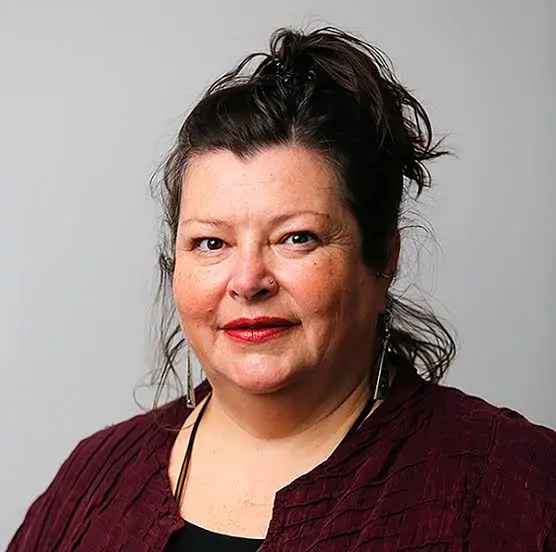 Marie-Josée HouleFederal Housing Advocate, Canadian Human Rights Commission
A family can move down the road and out of reach of a housing program they rely on. A new address across a municipal line can put them on a different wait-list. Across a provincial or territorial border, even the standards their landlord has to meet can change. For a First Nations family, moving onto or off reserve can change which government they have to ask for help in the first place.
“As people cross an invisible line, their whole world is different,” says Marie-Josée Houle, Canada’s first Federal Housing Advocate.
Houle spent five years leading Action-Logement, an Ottawa organization that helps tenants stay housed. As Canada’s housing advocate, Houle works with communities across the country to document where housing falls short and press governments to act. That work took her to Nunavut and Nunatsiavut, where residents described overcrowding and unsafe homes. She later joined Nunatsiavut’s president in taking those concerns to Newfoundland and Labrador’s premier.
Ottawa’s proposed budget includes more than $32 billion over 10 years for First Nations housing and infrastructure, with $12.7 billion for housing. Houle is calling for an Indigenous-led housing plan that spells out what a family should be able to count on wherever they live. Under that plan, First Nations, Inuit, and Métis would decide which homes their communities need, and governments would have to account for when the money reaches them.
A standard across borders
In Houle’s view, moving across a boundary shouldn’t mean losing access to adequate housing. She sees a role for Ottawa in setting a standard people can count on wherever they live.
First Nations already manage housing on reserve with federal funding. Beyond reserve boundaries, the government or organization responsible depends on where a person lives and which program they need.
“First Nations, Inuit, and Métis must be able to control and manage their own housing,” Houle says. “That’s the first step.” It was the top recommendation in the housing reports she developed with Indigenous governments, leaders, and experts. In her report on Inuit housing, she asked Ottawa, the Government of Nunavut, and Nunavut Tunngavik Incorporated to work out how to pay for both building and operating homes over the long term.
Sleeping in shifts
In Nunavut, Houle heard how overcrowding followed children into the classroom. “You’ll often get 14 or 18 people living in a two- or three-bedroom house with one bathroom and people sleeping in shifts,” she says. “The teachers don’t even bother giving kids homework because they don’t have a quiet place to do it. The homes are just so overcrowded, and there isn’t enough community space for the kids either.”
A housing shortage can become harder to see once people start leaving. “Some people are forced out of their communities because there’s nothing for them. If they’re not in the community, they’re not counted,” Houle says. “Then they face housing precarity and homelessness in the large urban centres because things are just so grossly unaffordable. This is how one system feeds into another.”
Counting new homes tells governments how much they’ve built. Tracking overcrowding and whether people can stay in their communities would tell them more about whose needs those homes are meeting.
Homes and services that last
In Île-à-la-Crosse, Saskatchewan, Métis Nation–Saskatchewan partnered with the village and Sakitawak Development Corporation on a plan for six small homes and two three-bedroom houses. The small homes appealed locally because they were energy efficient and generally cost less to build.
Houle measures the reach of a small housing project partly by what happens in the homes around it. “Most Indigenous folks don’t turn family away,” she says. “When your family has the opportunity to be housed, it takes the pressure off the entire community.”
It takes time for housing staff to earn someone’s trust, Houle says, and short funding cycles can break up the teams people rely on. “The second thing is to move from short-term project funding towards predictable decade-long investments. Housing is complex. It takes time.”
For someone looking for help, the first sign that funding has run out may come at the door. “People don’t know what they have access to, or where to go, or who does what,” Houle says. “You show up at the door and you’re told, ‘Oh, sorry, that doesn’t exist anymore.’ It’s not a great way to treat people, and it doesn’t lead to good outcomes.”
After the announcement
“If one level of government has made a nice announcement on money that’s dedicated, but it never flows, who holds them accountable? Who measures? Who’s watching? And then what’s the consequence?”
One proposal Houle puts forward is to appoint independent provincial and territorial housing advocates to track whether funding reaches the communities it was promised to. She’d start that work before any money flows, with governments and Indigenous leaders agreeing on what they’ll deliver, by when, and how communities can judge the results.
Ottawa has also renewed $300 million for Indigenous-led housing in urban, rural, and northern communities. The organization overseeing that funding, National Indigenous Collaborative Housing Incorporated, expects approved projects to start April 1, 2027. Before providers can receive money, they need signed agreements and confirmation of when their projects will need funds.
That makes April a first check on whether providers can get to work. It will take longer for families to see whether the new homes ease overcrowding enough for relatives who have been sleeping in shifts to get a full night’s sleep, or allow someone who wants to stay in their community to find a home there.